

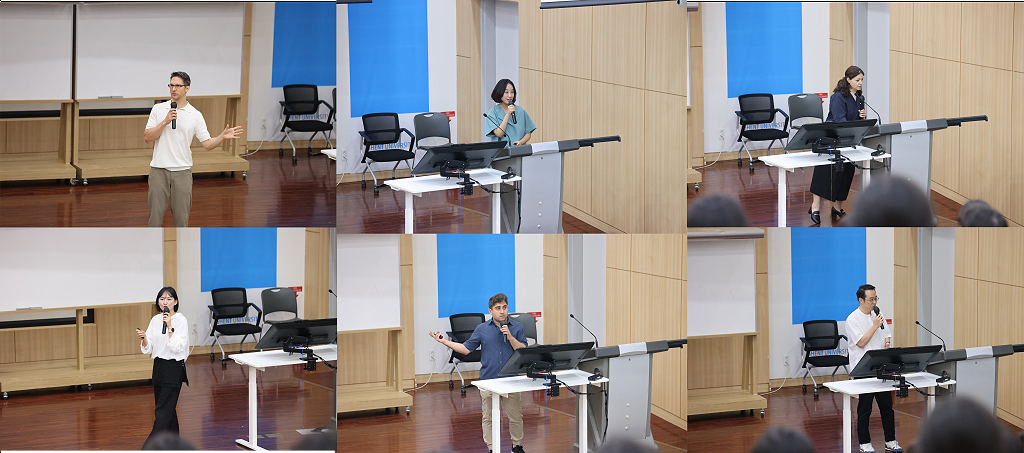
GUGC 5개 연구센터, 학생들에게 다양한 연구 참여 기회 소개
겐트대학교 글로벌캠퍼스(GUGC)는 최근 RC1부터 RC5까지 5개 연구센터의 연구 활동을 소개하는 연구 발표 세션을 개최했습니다.
이번 행사는 학생들에게 교실 밖에서 펼쳐지는 다양한 연구 분야를 소개하고, 연구 활동 참여 기회를 안내하기 위해 마련되었습니다.
이번 세션에는 각 연구센터를 대표해 Prof. Hoo Sun Chung(RC1), Prof. Mahta Mirzaei(RC2), Prof. Jihae Park(RC3), Dr. Manvel Gasparyan(RC4), Prof. Dongik Park(RC5)가 발표자로 참여해
각 센터의 주요 연구 분야와 프로젝트, 그리고 학생들을 위한 연구 참여 기회를 소개했습니다.
이번 세션에서는 식물과 식품 생명공학부터 환경기술, 데이터 사이언스, 인공지능, 바이오메디컬 연구에 이르기까지 GUGC에서 진행되고 있는 폭넓은 연구 분야가 소개되었습니다.
RC1의 Plant Biotechnology Research Center를 대표해 발표한 Prof. Hoo Sun Chung은 식물 스트레스 반응을 중심으로
식물 호르몬인 에틸렌의 역할, 인삼 스트레스 마커 개발, 식물 스트레스를 조기에 감지하기 위한 센서 기술 연구 등을 소개했습니다.
RC2의 Center for Food Biotechnology and Microbiology를 대표해 발표한
Prof. Mahta Mirzaei는 기능성 식품, 생리활성 펩타이드 및 단백질 연구와 함께 식품 산업의 항균 기술 및 유용 미생물 활용 연구를 소개했습니다.
RC3의 Center for Green Chemistry and Environmental Biotechnology를 대표해 발표한
Prof. Jihae Park은 첨단 소재와 환경 센싱 기술, 지속가능한 환경공학, 해양 및 바이오매스 자원의 산업적 활용 등 글로벌 환경 문제 해결을 위한 다양한 연구 활동을 선보였습니다.
RC4의 Center for Biosystems and Biotech Data Science를 대표해 발표한 Dr. Manvel Gasparyan은 수학, 컴퓨터과학 및 인공지능을 활용해 생명 시스템을 이해하는 연구 분야를 소개했습니다.
주요 연구 분야로는 질병 모델링, 유전체학, 생물정보학, 의약품 연구 및 헬스케어 분야의 AI 활용 등이 포함됩니다.
마지막으로 RC5의 Biomedical Research Center를 대표해 발표한 Prof. Dongik Park은 뇌 질환과 인지 기능, 개인 간 생물학적 차이 및 치료 반응을 중심으로 한 신경과학 연구를 소개했습니다.
장내 미생물과 인지 행동의 관계를 분석하는 연구와 항우울제의 작용 및 치료 반응을 보다 깊이 이해하기 위한 연구도 함께 소개되었습니다.
학생들은 인턴십, Bachelor Project, 연구 활동 및 국제 공동연구 등을 통해 실제 연구 경험을 쌓고 자신의 학문적 관심 분야를 탐색할 수 있었습니다.
이번 연구센터 소개 세션을 통해 학생들은 GUGC에서 이루어지고 있는 다양한 연구 활동을 보다 가까이에서 이해하고,
자신이 관심있는 연구분야와 참여 가능성을 탐색하는 기회를 가졌습니다.
앞으로도 GUGC는 학생들이 연구의 세계를 탐색하고 자신의 학문적 여정에 능동적으로 참여할 수 있도록 다양한 기회를 제공할 예정입니다.
GUGC's Five Research Centers Introduce Research Opportunities for Students
Ghent University Global Campus (GUGC) recently held a research introduction session featuring its five research centers,
RC1 through RC5. The event was designed to introduce students to the diverse research taking place beyond the classroom and encourage them to explore opportunities to participate in research activities.
Representatives from each research Center took part in the session, including Prof. Hoo Sun Chung from RC1, Prof. Mahta Mirzaei from RC2,
Prof. Jihae Park from RC3, Dr. Manvel Gasparyan from RC4, and Prof. Dongik Park from RC5.
The speakers introduced their Centers' key research areas, ongoing projects, and opportunities for student involvement.
The session highlighted the wide range of research conducted at GUGC, spanning plant biotechnology, food science, environmental technology, data science, artificial intelligence, and biomedical research.
Prof. Hoo Sun Chung from RC1, the Plant Biotechnology Research Center, introduced research on plant stress responses,
including the role of the plant hormone ethylene, the development of stress markers for ginseng, and sensing technologies for the early detection of plant stress.
Prof. Mahta Mirzaei from RC2, the Center for Food Biotechnology and Microbiology, presented research on functional foods, bioactive peptides and proteins,
as well as antimicrobial technologies and the beneficial use of microorganisms in the food industry.
Prof. Jihae Park from RC3, the Center for Green Chemistry and Environmental Biotechnology, highlighted research addressing global environmental challenges
through advanced materials, environmental sensing, sustainable engineering, and the industrial application of marine and other biomass resources.
Dr. Manvel Gasparyan from RC4, the Center for Biosystems and Biotech Data Science, introduced how mathematics, computer science, and
artificial intelligence can be applied to better understand biological systems. Key research areas include disease modelling, genomics, bioinformatics, pharmaceuticals, and AI applications in healthcare.
Finally, Prof. Dongik Park from RC5, the Biomedical Research Center, presented neuroscience research focusing on brain disorders, cognition,
individual differences, and responses to treatment. Current research includes studies on the relationship between the gut microbiome and
cognitive behaviour, as well as research aimed at improving the understanding of antidepressant treatments.
Despite their diverse research fields, all five Research Centers shared a common message: students are welcome to become part of GUGC's research community.
Through internships, bachelor's projects, research activities, and international collaborations,
students have opportunities to gain hands-on experience and explore their academic interests.
The session concluded with an informal networking opportunity, allowingstudents to meet the researchers and learn more about the research areas that interested them.
Through events like this, GUGC continues to provide students with opportunities to
discover the world of research and take an active role in shaping their academic journey.
겐트대학교 글로벌캠퍼스(GUGC)는 최근 RC1부터 RC5까지 5개 연구센터의 연구 활동을 소개하는 연구 발표 세션을 개최했습니다.
이번 행사는 학생들에게 교실 밖에서 펼쳐지는 다양한 연구 분야를 소개하고, 연구 활동 참여 기회를 안내하기 위해 마련되었습니다.
이번 세션에는 각 연구센터를 대표해 Prof. Hoo Sun Chung(RC1), Prof. Mahta Mirzaei(RC2), Prof. Jihae Park(RC3), Dr. Manvel Gasparyan(RC4), Prof. Dongik Park(RC5)가 발표자로 참여해
각 센터의 주요 연구 분야와 프로젝트, 그리고 학생들을 위한 연구 참여 기회를 소개했습니다.
이번 세션에서는 식물과 식품 생명공학부터 환경기술, 데이터 사이언스, 인공지능, 바이오메디컬 연구에 이르기까지 GUGC에서 진행되고 있는 폭넓은 연구 분야가 소개되었습니다.
RC1의 Plant Biotechnology Research Center를 대표해 발표한 Prof. Hoo Sun Chung은 식물 스트레스 반응을 중심으로
식물 호르몬인 에틸렌의 역할, 인삼 스트레스 마커 개발, 식물 스트레스를 조기에 감지하기 위한 센서 기술 연구 등을 소개했습니다.
RC2의 Center for Food Biotechnology and Microbiology를 대표해 발표한
Prof. Mahta Mirzaei는 기능성 식품, 생리활성 펩타이드 및 단백질 연구와 함께 식품 산업의 항균 기술 및 유용 미생물 활용 연구를 소개했습니다.
RC3의 Center for Green Chemistry and Environmental Biotechnology를 대표해 발표한
Prof. Jihae Park은 첨단 소재와 환경 센싱 기술, 지속가능한 환경공학, 해양 및 바이오매스 자원의 산업적 활용 등 글로벌 환경 문제 해결을 위한 다양한 연구 활동을 선보였습니다.
RC4의 Center for Biosystems and Biotech Data Science를 대표해 발표한 Dr. Manvel Gasparyan은 수학, 컴퓨터과학 및 인공지능을 활용해 생명 시스템을 이해하는 연구 분야를 소개했습니다.
주요 연구 분야로는 질병 모델링, 유전체학, 생물정보학, 의약품 연구 및 헬스케어 분야의 AI 활용 등이 포함됩니다.
마지막으로 RC5의 Biomedical Research Center를 대표해 발표한 Prof. Dongik Park은 뇌 질환과 인지 기능, 개인 간 생물학적 차이 및 치료 반응을 중심으로 한 신경과학 연구를 소개했습니다.
장내 미생물과 인지 행동의 관계를 분석하는 연구와 항우울제의 작용 및 치료 반응을 보다 깊이 이해하기 위한 연구도 함께 소개되었습니다.
학생들은 인턴십, Bachelor Project, 연구 활동 및 국제 공동연구 등을 통해 실제 연구 경험을 쌓고 자신의 학문적 관심 분야를 탐색할 수 있었습니다.
이번 연구센터 소개 세션을 통해 학생들은 GUGC에서 이루어지고 있는 다양한 연구 활동을 보다 가까이에서 이해하고,
자신이 관심있는 연구분야와 참여 가능성을 탐색하는 기회를 가졌습니다.
앞으로도 GUGC는 학생들이 연구의 세계를 탐색하고 자신의 학문적 여정에 능동적으로 참여할 수 있도록 다양한 기회를 제공할 예정입니다.
GUGC's Five Research Centers Introduce Research Opportunities for Students
Ghent University Global Campus (GUGC) recently held a research introduction session featuring its five research centers,
RC1 through RC5. The event was designed to introduce students to the diverse research taking place beyond the classroom and encourage them to explore opportunities to participate in research activities.
Representatives from each research Center took part in the session, including Prof. Hoo Sun Chung from RC1, Prof. Mahta Mirzaei from RC2,
Prof. Jihae Park from RC3, Dr. Manvel Gasparyan from RC4, and Prof. Dongik Park from RC5.
The speakers introduced their Centers' key research areas, ongoing projects, and opportunities for student involvement.
The session highlighted the wide range of research conducted at GUGC, spanning plant biotechnology, food science, environmental technology, data science, artificial intelligence, and biomedical research.
Prof. Hoo Sun Chung from RC1, the Plant Biotechnology Research Center, introduced research on plant stress responses,
including the role of the plant hormone ethylene, the development of stress markers for ginseng, and sensing technologies for the early detection of plant stress.
Prof. Mahta Mirzaei from RC2, the Center for Food Biotechnology and Microbiology, presented research on functional foods, bioactive peptides and proteins,
as well as antimicrobial technologies and the beneficial use of microorganisms in the food industry.
Prof. Jihae Park from RC3, the Center for Green Chemistry and Environmental Biotechnology, highlighted research addressing global environmental challenges
through advanced materials, environmental sensing, sustainable engineering, and the industrial application of marine and other biomass resources.
Dr. Manvel Gasparyan from RC4, the Center for Biosystems and Biotech Data Science, introduced how mathematics, computer science, and
artificial intelligence can be applied to better understand biological systems. Key research areas include disease modelling, genomics, bioinformatics, pharmaceuticals, and AI applications in healthcare.
Finally, Prof. Dongik Park from RC5, the Biomedical Research Center, presented neuroscience research focusing on brain disorders, cognition,
individual differences, and responses to treatment. Current research includes studies on the relationship between the gut microbiome and
cognitive behaviour, as well as research aimed at improving the understanding of antidepressant treatments.
Despite their diverse research fields, all five Research Centers shared a common message: students are welcome to become part of GUGC's research community.
Through internships, bachelor's projects, research activities, and international collaborations,
students have opportunities to gain hands-on experience and explore their academic interests.
The session concluded with an informal networking opportunity, allowingstudents to meet the researchers and learn more about the research areas that interested them.
Through events like this, GUGC continues to provide students with opportunities to
discover the world of research and take an active role in shaping their academic journey.


